Choosing a UX book to read can be a daunting task especially if you do not know how it will impact your work and career. This series aims at quickly summarizing UX books you know of and some you may not have read. We will outline 5 main takeaways from each book and detail how long it takes to read the book. If you find the insights valuable then you can consider buying the book and diving deeper into its material.
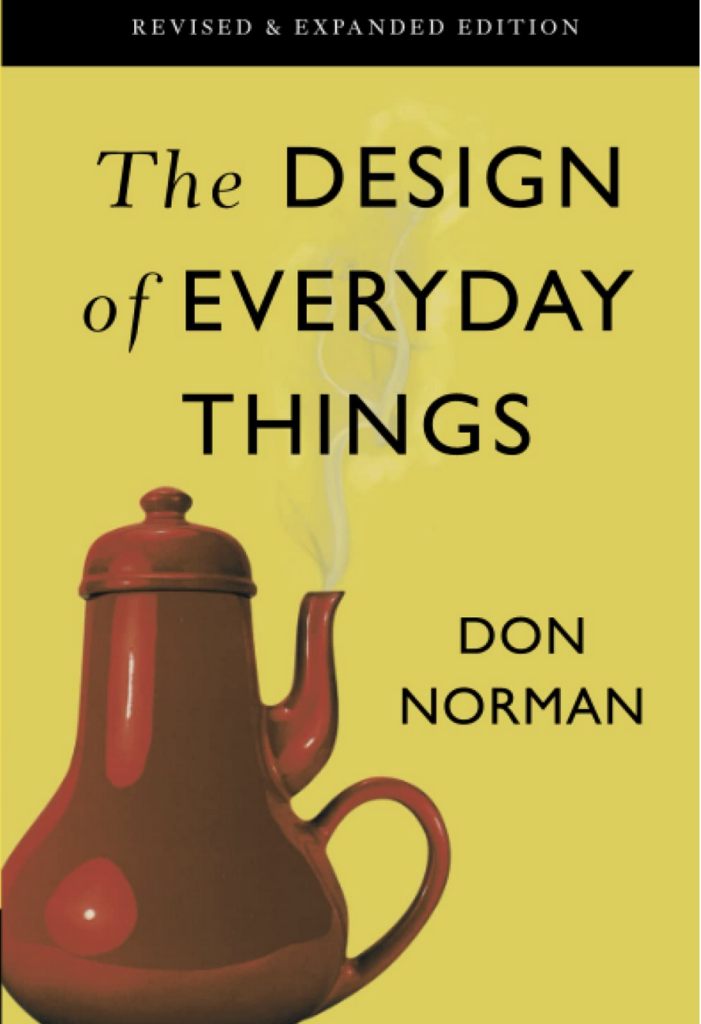
The Design of Everyday Things, Don Norman – Quick summary
You may have heard of today’s book several times or seen it in UX must read book lists. The Design of Everyday Things shows that good, usable design is possible. The rules are simple: make things visible, exploit natural relationships that couple function and control, and make intelligent use of constraints. The goal: guide the user effortlessly to the right action on the right control at the right time.
Book Reading Time: 10.2 Hours
Amazon Rating: 4.7 / 5
About the author
If you did not know, Don Norman is a co-founder of the Nielsen Norman Group, and holds graduate degrees in both engineering and psychology. His many books include Emotional Design, The Design of Future Things, and Living with Complexity. He lives in Silicon Valley, California
5 Main takeaways from The Design of Everyday Things:
- Design for Affordances:
Create products with clear affordances that communicate their functions and how users should interact with them. - Use Signifiers Effectively:
Utilize signifiers to provide cues and instructions for users, guiding them through the interaction process. - Ensure Feedback and Mapping:
Provide immediate feedback to users’ actions and establish clear mappings between controls and their effects to enhance usability. - Consider Mental Models:
Design interfaces that align with users’ mental models, making it easier for them to predict the system’s behavior. - Iterative Design:
Embrace an iterative design process, incorporating user feedback and refining designs based on usability testing results.
Balanced Reviews on this book:
“An excellent book for anyone who’s interested in how things should be designed. The Design of Everyday Things is well written, very readable, and full of common sense.
There are two small drawbacks. First, some of the graphics are a bit small. Second, the book is somewhat dated. However, many of the basic principles of design covered by the book will endure.” – Brian S
“The books is good, but the author repeats himself a lot. The book kind of feels like there is a decent amount of filler (like most non-fiction books tend to seem).But that said, the book is genuinely interesting and insightful.I would recommend any engineer read this book.It will get you really thinking about user interface.” – Kindle review
“Other than the last two chapters, most of the book is stuffed with non-value adding or time consuming information. More interesting examples of design flaws or successes are required and less of the historical examples of design. The design technics and methodologies are maybe good for engineers but have limited use for business people.” – Amazon review
“Its a good book with great examples. It does shed some light on the troubles with design and shows problems from another perspective and it should be rightfully considered as one of the key books regarding design in general. However, It’s quite shallow and the author doesn’t go into much of a detail. Don’t get me wrong, I am not a literary critic or anything but as a European, the style is not a strong suit. People, who are used to the American style of literature are going to be fine, but sometimes there is too much repetition of ideas and a bit deeper analysis of the problem would be beneficial. To sum up. The contribution of the author in the field of proper and functional design is huge and the terminology used is crucial for understanding the key principles of design is paramount. But I would go into a bit more detail.” – Radislav Šplíchal